 The Banerji Protocols
 Emergency Kit
 Help
Help Blogs
Blogs
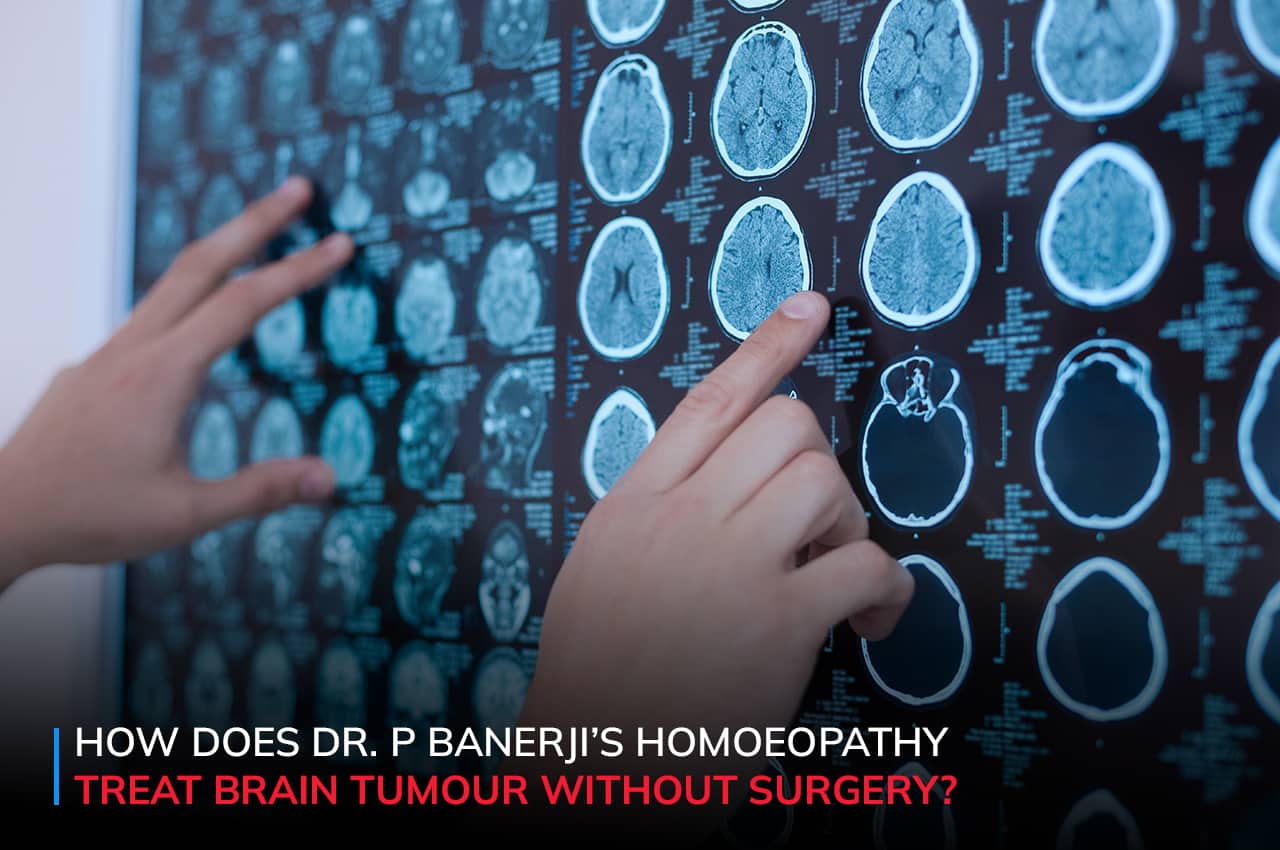
One of the most difficult medical illnesses of our time is brain tumours, especially if malignant. In India alone, brain cancer continues to be a deadly disease that requires prompt and efficient treatment, with over 28,000 new cases and 24,000 fatalities per year. Many patients look for alternate, non-surgical solutions for managing brain tumours, even though standard treatment frequently entails invasive surgical procedures. With an emphasis on homoeopathy as a secure and efficient substitute, Dr. P Banerji Homoeopathic Research Clinic (PBHRC) has developed a novel, scientifically supported method of treating brain tumours without surgery.
This blog answers key questions, explores treatable brain tumour types, and highlights how Dr. P Banerji’s homoeopathy offers hope to patients.
Historically, chemotherapy, radiation, and surgery have been the mainstays of brain tumour treatment. Despite their frequent effectiveness, these techniques carry hazards like infection, neurological impairments, and serious adverse effects. If the cancer is in an inaccessible place or the patient’s health precludes intrusive operations, surgery might not always be an option.
This idea is contested by Dr. P Banerji’s homoeopathy, which provides a non-invasive, surgically-free treatment for brain tumours. The method is based on an understanding of the biological makeup of the tumour and the individual’s distinct constitution. PBHRC employs carefully chosen homoeopathic medications that are well-known for their capacity to target aberrant cell growth and promote the body’s natural healing processes.
The homoeopathic protocols developed by Dr. P Banerji and his team are backed by years of clinical research and successful patient outcomes. These medicines help to:
It is important to note that while not every brain tumour can be cured without surgery, many patients have experienced significant improvements and prolonged survival using this homoeopathic approach. The treatment is personalised and monitored continuously to ensure maximum efficacy and safety.
Early diagnosis plays a crucial role. At PBHRC, efforts are made to educate patients and caregivers about early warning signs and symptoms of brain tumour such as persistent headaches, vision changes, seizures, and cognitive difficulties. Timely intervention increases the chances of effective homoeopathy treatment for brain tumour and may even reduce the need for surgical intervention.
Brain tumours vary widely in type, location, growth rate, and malignancy. They can be broadly categorised as benign (non-cancerous) or malignant (cancerous). The treatment possibilities and prognosis depend on these factors. Dr. P Banerji’s homoeopathic treatment focuses on certain types of brain tumours, particularly those where surgery is risky or not feasible.
1. Malignant Brain Tumours
Malignant brain tumours such as gliomas, astrocytomas, and medulloblastomas are aggressive and have the potential to invade surrounding brain tissue. Conventional treatment for these often involves surgery combined with radiotherapy or chemotherapy. However, PBHRC’s homoeopathy protocols provide a complementary or alternative option for patients who:
The homoeopathic medicines are chosen to address the aggressive nature of malignant tumours and help control their growth, thereby improving symptoms and quality of life.
2. Benign Brain Tumours
Benign tumours such as meningiomas, pituitary adenomas, and acoustic neuromas usually grow slowly and may sometimes be observed without immediate surgery. In such cases, homoeopathy can play an important role by:
3. Cystic or Non-Invasive Tumours
Certain cystic brain tumours or non-invasive lesions also respond well to homoeopathy. Since these tumours do not aggressively invade tissues, homoeopathic treatment can focus on balancing the body’s systems and reducing symptoms effectively.
PBHRC has developed a specialised approach to Brain Tumour Treatment Without Surgery that is grounded in scientific research and clinical expertise. Some highlights of their approach include:
Brain cancer represents a severe health challenge worldwide. In India, the increasing incidence of central nervous system tumours demands greater awareness and innovative treatment options. Brain cancer arises from malignant growth of brain cells, disrupting normal brain function and posing life-threatening risks.
PBHRC’s work extends beyond treatment; they also focus on early detection and awareness, helping patients recognise symptoms early and seek timely medical advice. Their homoeopathy treatment protocols are designed to provide a viable alternative for those seeking non-surgical options, offering hope to many.
The idea of treating brain tumours without surgery might seem unconventional, but the evidence and patient outcomes from Dr. P Banerji Homeopathic Research Clinic demonstrate that it is possible. With a commitment to safe, effective, and non-invasive care, PBHRC provides a hopeful path for patients battling brain tumours.
FAQ
Can brain tumours be treated without surgery?
Yes, Dr. P Banerji’s homoeopathy offers a non-invasive alternative for brain tumour treatment without surgery, focusing on natural healing and tumour control.
Which types of brain tumours can be treated with homoeopathy?
Homoeopathy can potentially treat certain malignant, benign, and cystic brain tumours, especially when surgery is risky or not feasible.
Is homoeopathy for brain tumours safe and effective?
Yes, PBHRC’s homoeopathic treatment is research-backed, personalised, and free from harmful side effects, aiming to improve symptoms and quality of life.