
 The Banerji Protocols
 Emergency Kit
 Help
Help Blogs
Blogs
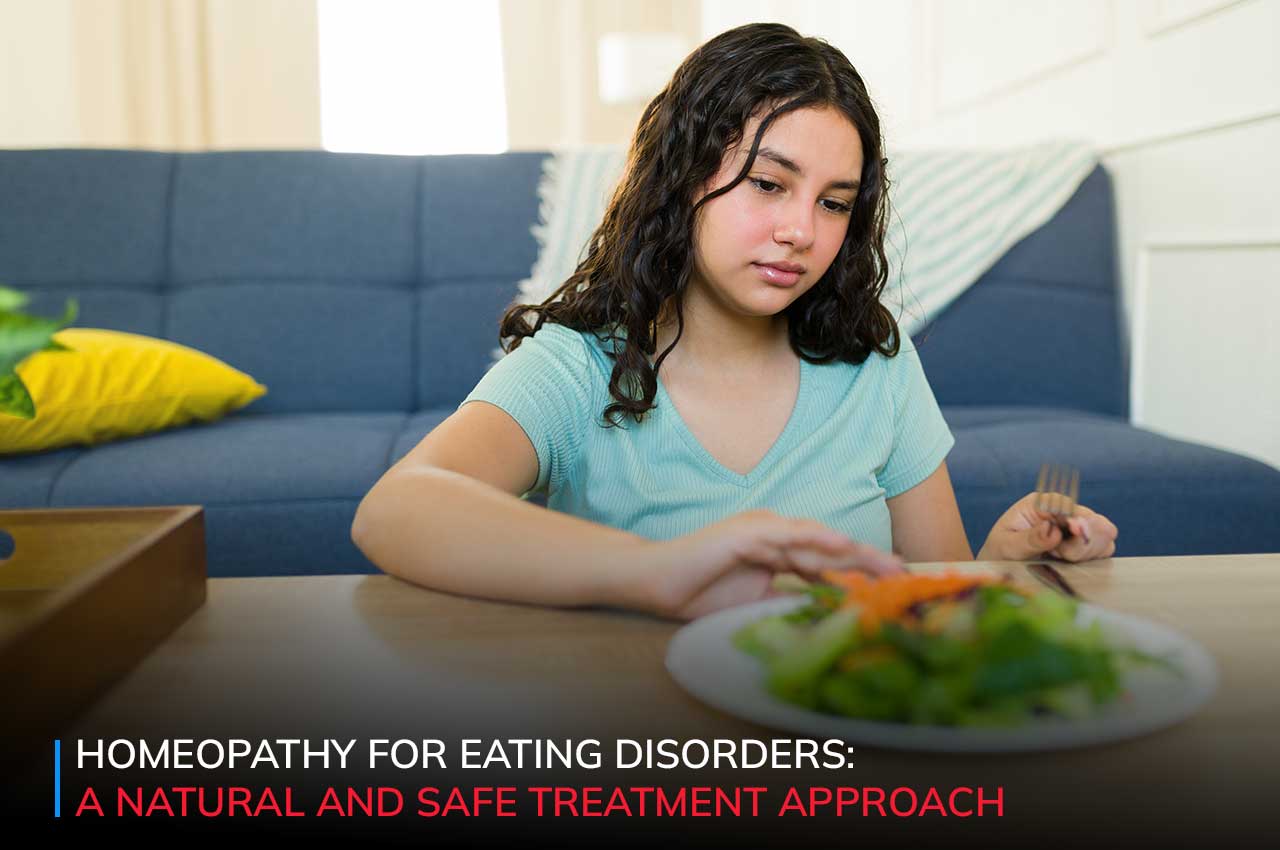
Eating disorders are complex diseases affecting your physical health, emotional health, digestion and metabolism. The four most common types are anorexia nervosa, bulimia nervosa, binge eating disorder and appetite disturbances. They are caused by stress and can be traced back to underlying emotional or psychological imbalances.
Eating disorders are far more prevalent than commonly assumed. Studies show that around 5.5% of women and 2.7% of men will develop an eating disorder in their lifetime, while approximately 1–3% of the population is actively struggling at any given time.
Traditional treatment for these types of eating disorders focuses on addressing the individual’s nutritional needs, engaging in psychotherapy and using some type of medical supervision. Many individuals with eating disorders look to complementary treatment. Homeopathic treatment for eating disorders is an effective means of providing the individualised, holistic and gentle approach.
Eating disorders often involve appetite imbalances. Some individuals experience no hunger, while others struggle with intense cravings and emotional eating. Even after dietary correction, these appetite disturbances may continue. Homeopathic treatment for eating disorders addresses appetite imbalance by treating the underlying cause.
Homoeopathy does not require individuals to force their appetites to change. Instead, it works to stimulate the individual’s ability to self-regulate their appetite. Often, appetite imbalances are related to stress or anxiety as well as suppressed emotions. Therefore, homoeopathic remedies are chosen based on the individual’s specific symptoms and emotional patterns. This individualised approach helps support the body in regulating appetite naturally.
When it comes to homoeopathy treatment for eating disorders, the remedies are determined after an in-depth analysis of the individual’s case. The analysis includes consideration of the patient’s physical symptoms, mental state and emotional triggers. The goal of homoeopathy is to help the patient restore a natural, healthy appetite over a period of time. As the patient continues on his or her course of treatment, their natural hunger cues will begin to become normalised.
The Dr P. Banerji Homoeopathic Research Clinic (PBHRC) advocates for a structured, protocol-based approach to homoeopathic treatment. The principles of homoeopathy apply to all eating disorders as well as all conditions where curing the cause of the disorder is the most beneficial approach to treatment.
Eating disorders typically produce multiple digestive problems. Changing one’s eating pattern has weakened the body’s digestive system. As a result, individuals with poor digestion have lower metabolic rates, and they absorb fewer nutrients due to inefficiencies in their digestive systems.
A significant aspect of homeopathic treatment for eating disorders focuses on metabolic regulation and balance in digestion. In homoeopathy, digestive health can indicate internal health. The symptoms due to a lack of digestion would include bloating, acidity, nausea, constipation, and irregular bowel habits. Homoeopathic remedy aims to return the body to some balance by giving the body natural support for healthy digestion.
The metabolic system is directly related to the appetite and what is digested. It may reduce the metabolic rate of an individual and have a direct effect on their energy levels. Through homeopathic treatment for eating disorders, improved absorption, along with improved internal regulatory functions.
Individuals who suffer from eating disorders should receive ongoing support. Supportive therapies and treatments have been shown to contribute positively to recovery for individuals. Medical intervention is still necessary to treat the physical symptoms of your disorder.
Homoeopathy treatment for eating disorders provides excellent long-term support with conventional care and guidance from trained practitioners, helping to ensure a long-term, positive outcome and overall increased well-being.
1. Can homoeopathic treatment for eating disorders regulate appetite?
Answer: Yes, homeopathic treatment for eating disorders helps restore natural hunger and satiety cues.
2. Is homoeopathy treatment for eating disorders research-based?
Answer: PBHRC follows structured protocols aligned with homoeopathy treatment for eating disorders.
3. How long does homeopathic treatment for eating disorders take to show results?
Answer: The response to homoeopathy treatment for eating disorders varies by individual and depends on the consistency and severity of symptoms.
4. Is homoeopathy safe for individuals with eating disorders?
Answer: Homoeopathic remedies are generally considered safe when prescribed by a qualified and experienced practitioner. However, because eating disorders can involve serious medical complications, homoeopathy should always be used alongside medical supervision.
5. Can homoeopathy be used for all types of eating disorders?
Answer: Homoeopathy may be used as supportive care for various eating disorders, including anorexia nervosa, bulimia nervosa, and binge eating disorder. The approach remains highly individualised and depends on the person’s physical symptoms, emotional state, and overall health status.
6. Is homoeopathy suitable for children and adolescents with eating disorders?
Answer: Homoeopathy is often considered a gentle system of medicine, making it suitable for children and adolescents when prescribed by trained practitioners. However, early medical and psychological intervention remains essential, especially given the early age of onset seen in many eating disorders.